Companion Cropping for the 2026 Season: OSR, Cereals and Living Mulches
Updated: Aug 4
Companion cropping has been moving from niche practice to mainstream arable management for a few years now. Increased interest from growers has looked to improve resilience, reduce inputs and build healthier soils. As the 2026 drilling season approaches, Phil Jarvis, Head of Operations at Oakbank, and Harry Moffat, Senior Advisor, discuss why the focus is not simply on growing a crop, it is also on choosing the right companion for the right outcome.
Oilseed rape is coming back and companions are part of the story
Confidence in oilseed rape (OSR) is returning. AHDB's recent Planting and Variety Survey (published 9th June 2026) puts the GB oilseed rape area for this harvest at an estimated 358,000 hectares - a rise of 49% year on year. The rise comes from a very low base: the 2025 area of 241,000 hectares was the lowest in more than four decades, and even after a 49% recovery the 2026 figure sits below the 391,000 hectares grown in 2023. AHDB notes that confidence remains a limiting factor for some growers after several years of pest pressure and variable performance.
In oilseed rape, companion cropping is now well established as part of an integrated approach to crop establishment and cabbage stem flea beetle (CSFB) management. Mixtures containing species such as buckwheat, berseem clover and fenugreek help create a more diverse crop canopy while encouraging stronger early growth.
Across five trials led by ADAS, companion crops produced reductions in CSFB pressure: up to 47% fewer adults, up to 52% less adult feeding damage and up to 48% fewer larvae.
This matters more each year because the chemical fallback has largely gone. Pyrethroid resistance is now widespread in England, with up to 95% of flea beetle populations showing resistance in 2023.
Companions should sit alongside the other cultural controls, including variety choice, drilling date, seed rate and cultivation
For the full picture on species selection, drill choice and how companion cropping differs from bi-cropping and trap cropping, see our guide to CIPM3 and IPM3 companion cropping.

Getting OSR companions right this autumn
Northamptonshire OSR grower David Beesley commented on his companion:
We chose to plant buckwheat and vetch and it came really well with the OSR, planted at the same time. It appeared to help and the companion died away as it should over winter
That raises the question growers ask most often, which is whether to drill the companion first. The AHDB work found that sowing companions one to two weeks ahead of the OSR helped maximise the protectant effect, and the OSR Reboot initiative puts the figure at around a 40% reduction in adult feeding damage where the companion goes in roughly a week ahead. In practice, as David found, drilling both together very often works, and in a dry August it is usually the better call. Any soil disturbance before the OSR goes in risks losing the moisture the crop needs, and moisture is the factor that decides establishment more than anything else.
Harry said that many growers have found these companions, as a combination or on their own, improve establishment, support soil biology and fit well within Integrated Pest Management (IPM) strategies. Seed treatments such as BioCoat Gold aim to support germination and early root growth in a range of cover and companion crops.
Buckwheat and berseem clover are a reasonably predictable starting point for an OSR companion, which is why they anchor our standard OSR companion crop mix.
Companions in cereals
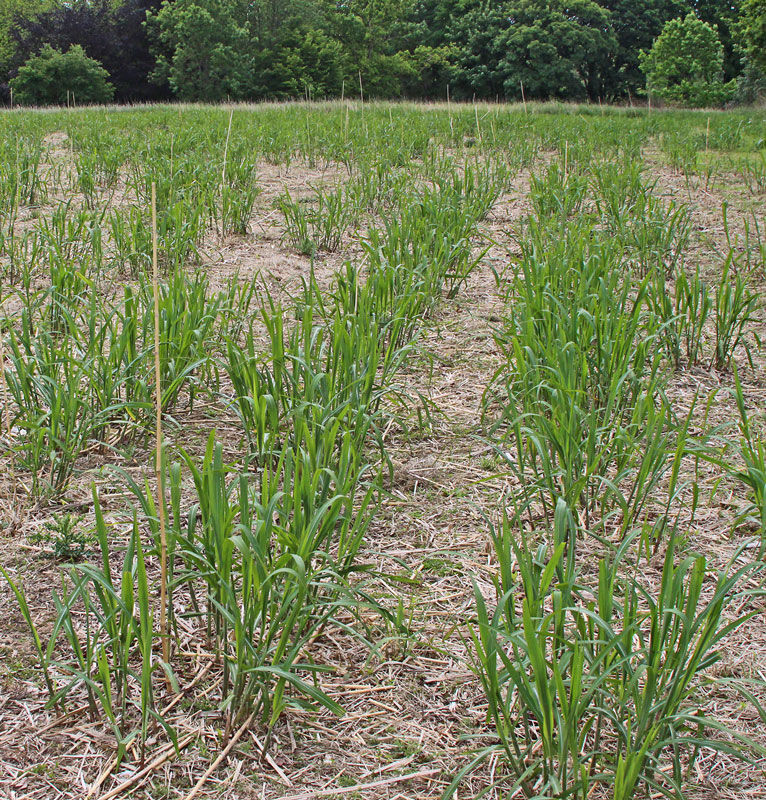
Companion cropping is no longer confined to oilseed rape. Recent work has demonstrated that cereals can also benefit from carefully selected companion species, provided herbicide programmes and establishment techniques are planned correctly. Legumes including crimson clover, berseem clover and vetches, together with species such as linseed and buckwheat, are being evaluated for their ability to improve biodiversity, stimulate soil biology and reduce reliance on synthetic inputs without compromising crop performance.
The constraint is more about chemistry than agronomy. Pre-emergence residual herbicides rule out many species in wheat, which is why our trials with Velcourt have narrowed the options to peas, beans and linseed. In oats, where pre-emergence residuals are not an issue, vetches open up as an option.


Living mulches and the legume fallow
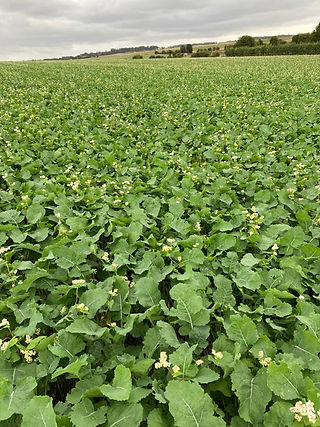
Harry widened the conversation to the growing interest in living mulches. Rather than companions that die off after a single season, these low-growing understories remain beneath the cash crop, protecting the soil year-round. Small-leaved white clovers varieties have shown particular promise because they produce minimal competition with cereals while delivering significant environmental benefits.
Establishment has always been the hard part and this is where the thinking has moved on. We have had particular success establishing living mulches within a one-year legume fallow, which gives the clover an entire season to establish without competition from a cash crop.
Kent grower Ben Amps has taken that route.
Planting within a legume fallow is a great entry into a living mulch because it can be tricky to establish in a standard rotation. We trialled a small area, about 5ha, and since then it has gone to full field scale and my following wheat crop has done well. It performed the same as average across the rest of the farm, but I have spent nothing on cultivations where the living mulch is.
Harry and I agree that the secret lies in getting establishment right. Seed rates, drilling dates and variety selection all need to be balanced carefully so the mulch supports rather than competes with the main crop. When managed successfully, living mulches can suppress weeds, improve soil structure, encourage earthworm activity, increase biological diversity and fix nitrogen, helping reduce fertiliser requirements over time. Growers are also reporting cleaner water, reduced erosion and improved trafficability in wetter conditions.
Where establishment or seed rates go wrong, or in dry seasons, competition with the cash crop can cost yield. Ben's experience of matching farm average while cutting cultivation costs is a great example of how the technique can work, but it does take careful management and planning. Our mini guide to living mulches sets out the evidence on both sides, and our living mulch clover seed page covers the small-leaved varieties we use.
What this means for CIPM3 and SFI26 Window 2
Companion cropping continues to be funded under the Sustainable Farming Incentive (SFI). The action code has not changed for the 2026 offer: CIPM3, companion crop on arable and horticultural land, pays £55 per hectare per year over three years and covers trap cropping, intercropping and undersowing to form a living mulch.
SFI26 Window 2 opens in September 2026 for all farmers and land managers, which is after most OSR companions will already be in the ground. CIPM3 allows you to use an existing companion crop to meet the action, provided it meets the requirements. Growers drilling companions this August may be able to bring that land into an agreement in September. Keep evidence of what you have done, including field operations, invoices and photographs.
Our SFI26 factsheet and action guide covers the wider offer.
Choosing the right companion for the right outcome
Cropping system | Objective | Typical companion species | Termination | Key benefits | Main management points |
Oilseed rape | Improve establishment and reduce CSFB pressure | Buckwheat, berseem clover, fenugreek as the standard mix; optional vetch, oats or beans in some systems | Frost-sensitive species or manage with herbicides where appropriate | Masks the crop from CSFB, encourages beneficials, scavenges nutrients, enhances soil biology | Drill with the OSR in most seasons, or up to two weeks ahead where moisture allows. Avoid excessive competition |
Cereals | Improve soil health and nutrient cycling while maintaining yield | Peas, beans and linseed in wheat; vetches in oats | Frost or herbicide, depending on species | Nitrogen fixation, improved biodiversity, stronger soil biology, potential weed suppression | Herbicide compatibility is the key challenge. |
Living mulches | Permanent understorey to improve long-term soil function | Small-leaved white clover varieties | Managed to persist for several seasons | Continuous soil cover, weed suppression, nitrogen fixation, improved soil structure, reduced erosion | Requires careful seed rates and establishment |
Things to consider now
Decide the objective before the species and check your herbicide programme, especially where clover is intended to persist
Order companion seed now for August drilling
Considering one-year legume fallow as an entry point for living mulch
Keep records from drilling onwards so an existing companion crop can support a CIPM3 claim in Window 2
Harry said that the message is clear. Companion cropping should not be viewed as a single management solution, but as a flexible system that can be adapted to individual farms and rotations. Whether supporting oilseed rape establishment, improving cereal resilience or introducing permanent living mulches, companion crops are becoming an increasingly valuable tool for growers seeking profitable production alongside healthier soils and lower-input farming.